ServicesWhole-house carbon filtration
Whole-House Carbon Filtration in Rowlett
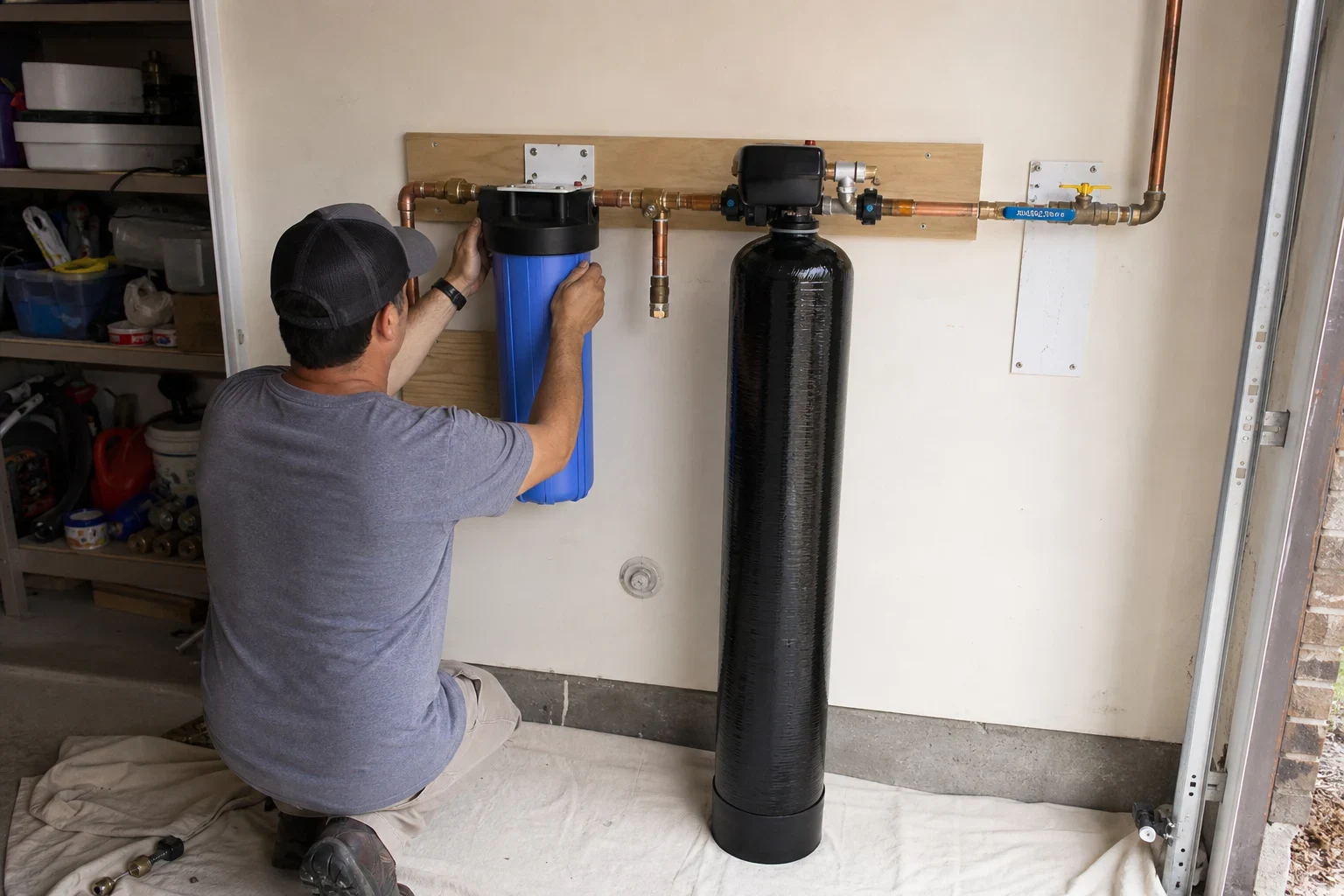
We put a carbon system on your main water line so every faucet, shower and appliance runs without that pool-water flavor and odor. Before anything is mounted, we check your disinfectant level, match the tank to your home's peak flow and walk you through each part.
What a whole-house carbon filter does
City water is disinfected with chlorine or chloramine so it stays safe on its way through miles of pipe. That is a good thing, but by the time it reaches your kitchen it can taste like a pool, and some people notice dry skin or a sharp smell in a hot shower. Activated carbon removes that disinfectant by adsorption, where the chlorine compounds bind to the carbon's huge internal surface area as water passes through.
A whole-house system puts that carbon on the main line, after the shutoff and before the water heater, so treated water reaches every fixture. The right media matters. Standard granular carbon handles free chlorine well. Chloramine is tougher: it breaks down only on catalytic carbon and needs a longer stay in the media bed, so we check which disinfectant your utility is using before picking the tank.
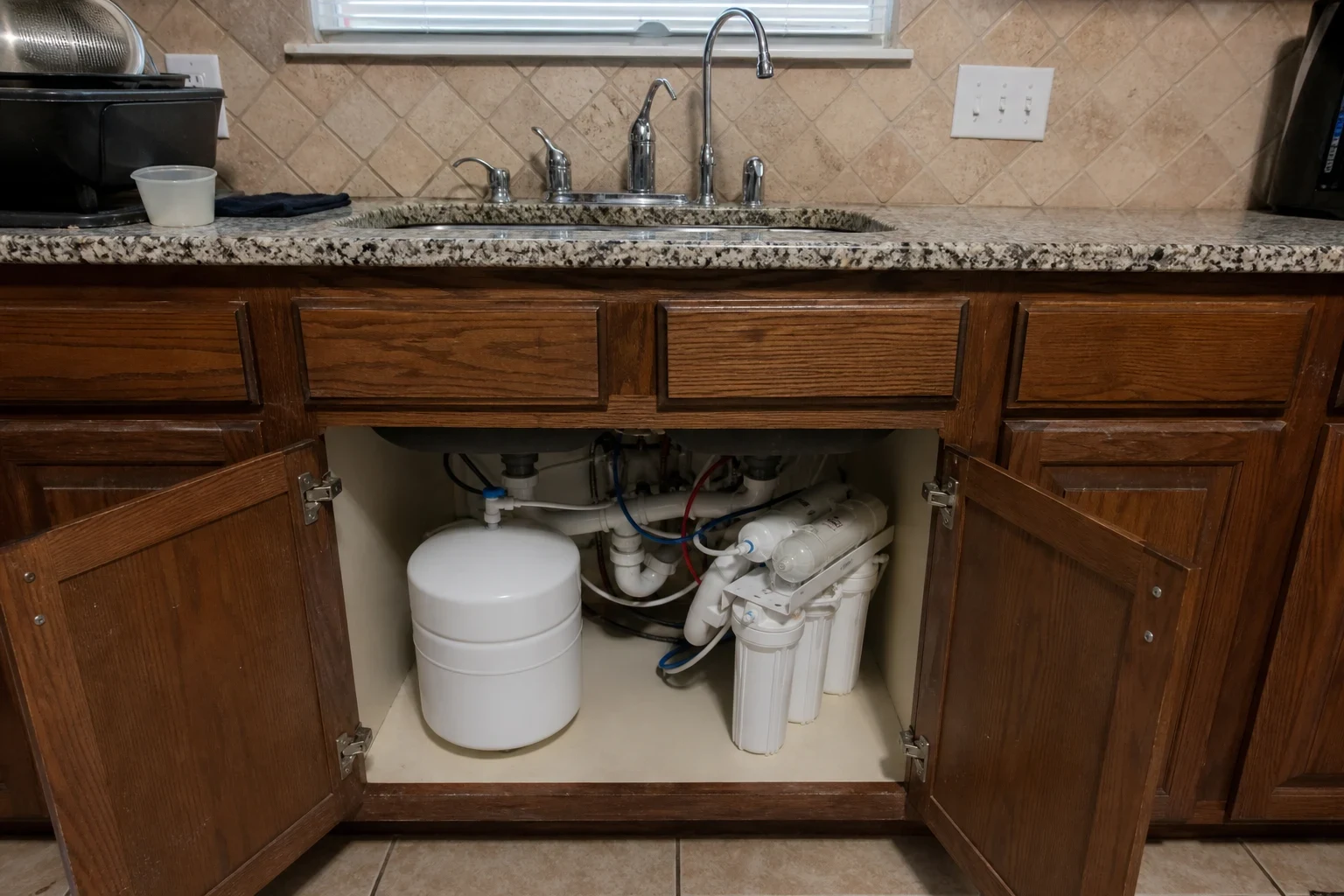
Carbon earns its place when the trouble is something you can taste or smell, or chlorine you feel on your skin after a shower. Worried about lead from older pipes, or trace contaminants in the water you drink? Under-sink reverse osmosis handles those jobs better than a carbon tank, and we will point you there instead of selling you the wrong equipment.
What the job includes
Disinfectant and flow check
We test chlorine at a tap and count your bathrooms and fixtures. Those two numbers decide the media type and tank size.
Carbon tank sized for contact time
Carbon only works if water spends enough seconds in the media bed. We size the tank so your peak flow, say two showers and the dishwasher at once, still gets full contact without a noticeable pressure drop.
Sediment prefilter
A cartridge prefilter ahead of the tank catches sand and pipe scale that would otherwise coat the carbon and shorten its life.
Bypass valve and shutoffs
Every install gets a bypass so water keeps flowing to your home during service. Isolation valves on both sides make future media changes clean and quick.
Neat plumbing and cleanup
We protect the floor, cut in with PEX or copper to match what you have, flush the new media to clear carbon fines, and leave the area as we found it.
Signs carbon filtration fits your home
Pool smell from the tap
A bleach or swimming pool odor, strongest first thing in the morning, is chlorine. Carbon is the standard fix.
Coffee and tea taste off
Chlorine reacts with the oils in coffee and tea and flattens the flavor. People often notice the difference within a day of install.
Harsh showers
A hot shower drives chlorine out of the water as vapor, so it lingers in the air of a closed bathroom and settles on your skin and hair. A kitchen pitcher filter can't touch that.
Filters at every faucet
If you are changing pitcher, fridge and showerhead cartridges on separate schedules, one tank on the main line can replace most of that.
Earthy or musty odor
Some seasonal taste and odor compounds also respond well to carbon. We test first to make sure that is what you have.
How install day runs
- 1
Test and plan
We start with a chlorine reading and a look at where your main line enters, often the garage wall on a slab home. We pick a spot with room for the tank, the bypass and service access.
- 2
Shut off and cut in
Water to your home is off for a few hours while we install the prefilter, bypass and tank. We pull a plumbing permit where the city requires one.
- 3
Flush the media
New carbon releases fine black dust, so we run water through the tank until it clears before opening it to your fixtures.
- 4
Verify at the tap
We retest chlorine after the system and show you the reading next to the one we took before. Then we walk you through the bypass and the prefilter change.
What moves the cost
Before we touch a pipe, you get a written estimate broken out line by line, showing what each part costs and why it belongs in your system. Four things account for most of the difference between one home and the next.
- Chlorine or chloramine
- Catalytic carbon for chloramine costs more than standard granular carbon, and it usually needs a larger bed for the same flow.
- Size of your home
- More bathrooms mean higher peak flow, which calls for a bigger tank to keep contact time and pressure where they should be.
- Where the main line runs
- An accessible line in the garage is a short job. A line buried in a wall or reached through finished space takes more labor.
- Backwashing or upflow tank
- A backwashing tank needs a drain nearby and a control head. An upflow, non-backwashing design skips both, which can simplify the install.
Carbon filtration questions
Something not covered here? (972) 476-7792
How long does the carbon last?
Carbon life is measured in gallons treated, not months. For a typical family on city water, a properly sized tank runs for years before the media needs replacing. The sediment prefilter is changed more often, usually every few months, and our filter replacement and maintenance service can handle both.
Will a carbon tank make my showers weaker?
Not if it is sized right. Pressure loss you can feel almost always comes from a tank too small for the water moving through it. That is why we size to your peak demand, not your square footage.
Does it remove lead or soften water?
No. Carbon targets chlorine, taste and odor. Lead from older plumbing is better handled by under-sink reverse osmosis, and hardness needs a softener, which we only recommend after a hardness test shows you need one.
Should my irrigation line go through it?
Usually not. Sprinklers do not need dechlorinated water, and running them through the tank uses up carbon fast. When the plumbing allows, we keep the irrigation tap ahead of the system.
Do I need water testing first?
We take a basic chlorine reading on every visit. If you have other questions, like staining or an odd smell, a full water testing visit tells us whether carbon alone is enough or whether iron and sediment filtration belongs in front of it.
Find out what your water needs
Tell us what you are tasting or smelling and how many bathrooms you have. We will explain which carbon system fits and what goes into the install.