ServicesIron and sediment filtration
Iron and Sediment Filtration in Rowlett
Orange rings in the toilet, grit in faucet aerators, and laundry that comes out dingy all have a cause. We test your water to find it, then install a sediment or iron filter at the main line so clean water reaches every tap in your home.
What iron and sediment filtration actually does
Sediment is solid material: sand, pipe scale and rust flakes that ride along in the water. Iron is trickier. Ferrous iron is dissolved and invisible until it meets air, then it oxidizes into the orange-brown particles you see in a sink. Ferric iron is already in particle form. Each needs a different kind of filter, which is why we test before we recommend anything.
For loose sediment, a mechanical filter does the job: a spin-down screen or a pleated cartridge rated in microns. Dissolved iron needs an oxidizing step first, usually a backwashing tank with media that converts the iron to particles and traps it. In many homes the real source is inside the walls, such as a corroding galvanized line or a tank water heater shedding rust, and we tell you when that is the case instead of selling a filter to cover it up. We treat it the way we would want a neighbor to treat our house.
What the job includes
- Testing for iron form and level
- We check total iron and whether it is dissolved or particulate, plus pH and a sediment check. The EPA's secondary guideline for iron is 0.3 mg/L, the point where staining and metallic taste usually show up.
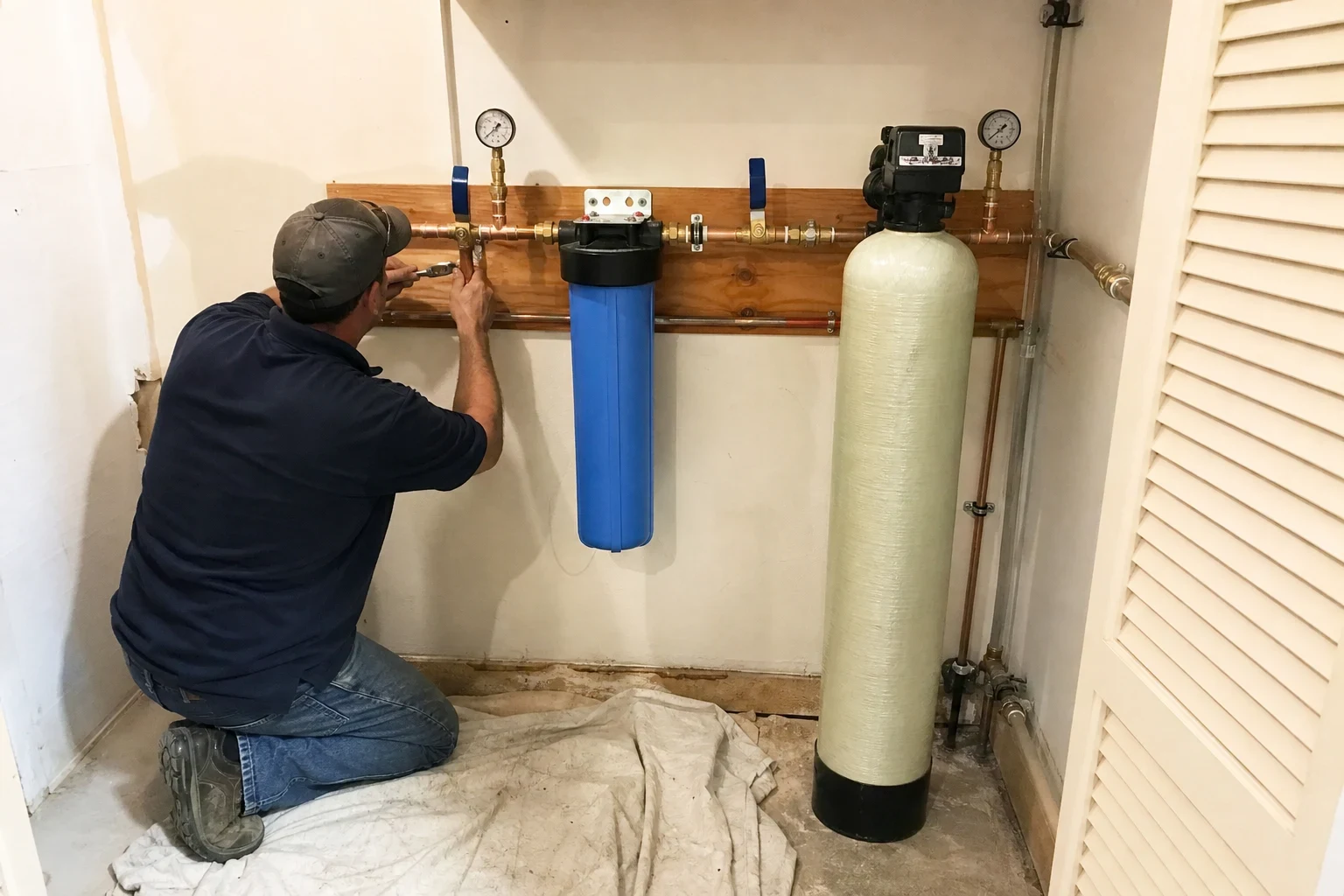
- Point-of-entry sediment filter
- A spin-down screen catches sand and heavy scale and can be flushed by opening a valve. Where finer particles are the issue, we add a pleated cartridge housing, often in the 5 to 20 micron range.
- Backwashing iron filter
- For dissolved iron we fit a mineral tank holding a bed of oxidizing media. Its control head reverses the flow through that bed at set intervals, rinsing the trapped iron down the drain. The unit needs a drain line and a standard outlet, and we plan both before install day.
- Bypass valve and pressure gauges
- Every system gets a bypass so you keep water during service, plus gauges before and after the filter. When the gap between the two readings widens, the cartridge is loading up and you can see it.
- Cleanup and a walkthrough
- We flush the lines, check every joint for leaks, wipe down the work area, and show you how to bypass and service the system yourself.
When stains and grit point to a filter
Rust stains that keep coming back
Orange-brown rings in toilet bowls, in tubs and around faucet bases usually mean iron. If they return days after you scrub them, iron is arriving with every fill.
Grit in aerators and showerheads
If you unscrew a faucet aerator and find sand or black flakes, sediment is moving through your plumbing and wearing on valves and appliance screens.
Water that clears after sitting
A glass that starts clear and turns cloudy orange after an hour is dissolved iron oxidizing. A glass that starts cloudy and settles to the bottom is particulate sediment.
Discolored laundry
Whites turning yellow or rust-spotted, especially after bleach, is a classic iron sign. Bleach speeds up the oxidation and sets the stain.
Rusty water from the hot side only
If only hot water runs orange, the water heater tank may be corroding. We point that out, because a filter will not fix a failing tank.
What moves the price
We price after testing, because the iron level and form decide what equipment you need. A home with light sediment may need only a flushable screen, while dissolved iron calls for a backwashing tank. You get a line-item estimate before any work starts.
Iron form and concentration
Particulate sediment is handled mechanically and costs less. Dissolved iron at higher levels needs oxidizing media and a larger tank.
Your home's flow rate
More bathrooms and simultaneous fixtures mean the filter must pass more gallons per minute without a pressure drop. Undersizing saves money up front and costs you water pressure every day.
Install location and pipe material
Easy access in a garage is simpler than a tight exterior wall. Copper, PEX and galvanized lines each take different fittings.
Drain and power needs
Backwashing systems need a drain and an outlet nearby. If neither is close, running them adds time and materials.
Ongoing upkeep
Cartridge systems need periodic replacements, while media tanks need occasional media refreshes. We explain the schedule up front so there are no surprises.
How the work goes, from test to clean water
- 1
A phone conversation first
You tell us what you are seeing and when it started. A few questions about stains, hot versus cold, and the age of your plumbing often narrow the cause before we arrive.
- 2
Test at your tap
We sample water at the point where it enters your home and at a fixture. Comparing the two shows whether the iron or sediment is coming in from the supply or picking up inside your pipes.
- 3
A written recommendation
You get a plain answer: which filter, why it fits your results, where it goes, and what the ongoing cartridge or media upkeep looks like. If testing shows the problem is a pipe or water heater, we say so.
- 4
Install day
With the main valve closed, we tie into the supply pipe close to its entry point, which is usually in the garage or along an exterior wall. The bypass, gauges and filter go in there, and backwashing units get their drain and power hookups. Most installs take part of a day.
- 5
Flush, check and follow up
We run water until it clears, set the backwash schedule, and confirm pressure at the far fixtures. Later we can handle filter replacement and maintenance on a schedule that matches your water.
Iron and sediment filtration questions
Can a water softener remove iron instead?
A softener can remove small amounts of dissolved iron, but heavy iron fouls the resin and shortens its life. If a hardness test also shows a softener makes sense, we may pair the two. Our water softeners page covers when that test supports one.
Will a filter lower my water pressure?
A properly sized filter causes only a small pressure drop when clean. Pressure falls as a cartridge loads with sediment, which is why we install gauges so you can see when it needs changing.
My stains appeared suddenly. Do I still need a filter?
Not always. City main flushing or nearby line work can stir up sediment for a few days. If it clears on its own, you may not need anything. If it keeps returning, testing will show the cause.
Does iron filtration also fix chlorine taste?
No. These filters are built to catch particles and iron, and chlorine passes straight through them. If taste or smell bothers you, we would talk about whole-house carbon filtration, which can be plumbed in right after a sediment pre-filter.
Is iron in water a health risk?
At the levels that cause stains, iron is mainly a nuisance for fixtures, laundry and taste rather than a health issue. If you want to know what else is in your water, our water testing service looks at a broader set of results.
Get to the bottom of the rust and grit
Describe the stains or grit you keep finding, and we will walk you through how we would test for the cause and what the fix likely involves. If a filter is not the right answer, we will say that plainly.