ServicesUnder-sink reverse osmosis
Under-Sink Reverse Osmosis in Rowlett
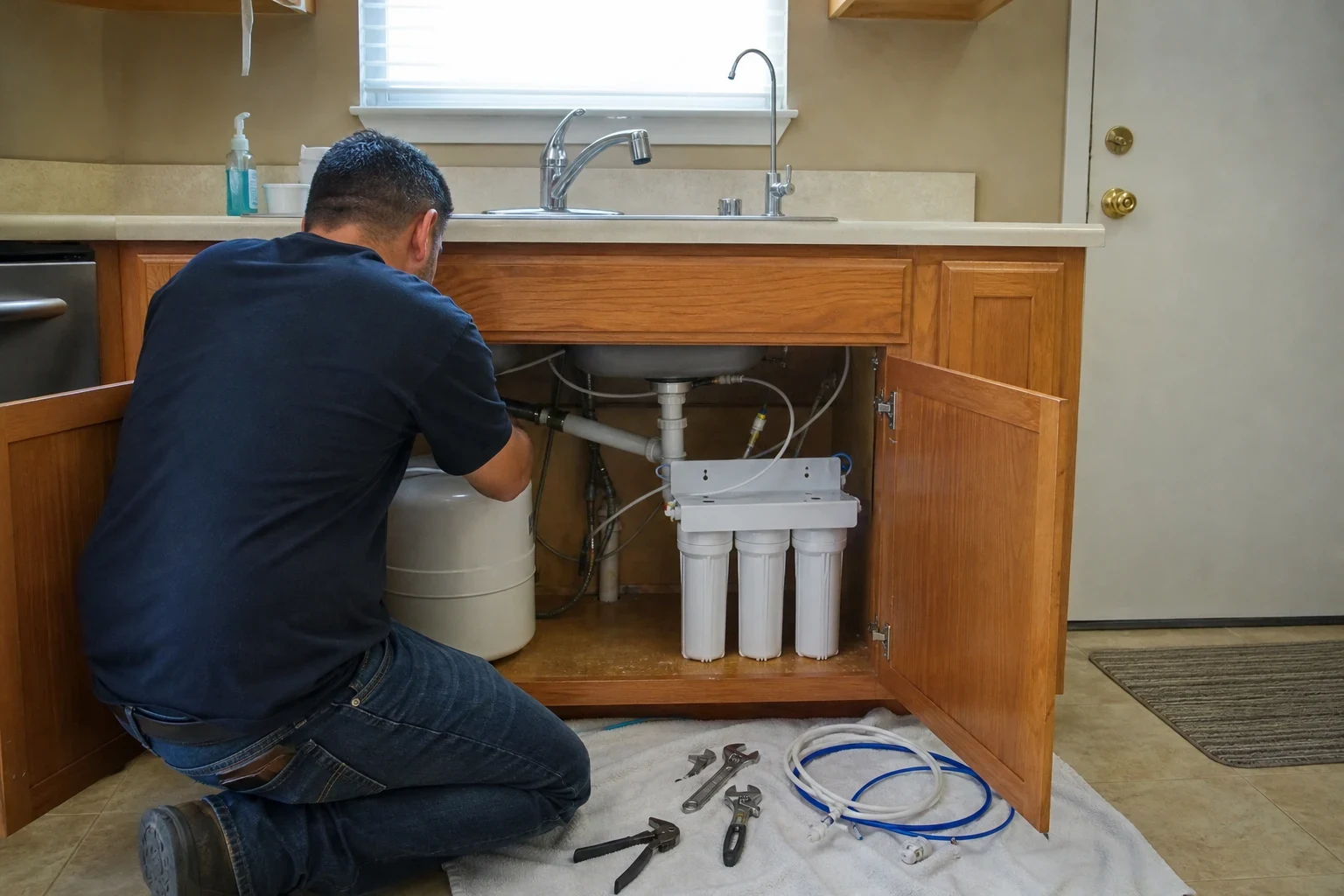
Reverse osmosis gives you one small faucet at the kitchen sink for drinking and cooking water, with lead, dissolved salts and chlorine taste taken out. We fit the filters and tank inside your cabinet, explain what each stage does and show you how to maintain it.
How Reverse Osmosis Cleans Your Drinking Water
At the heart of the system is a thin-film composite membrane. Household water pressure forces water across it, and the pores are so fine that only water molecules get through. Lead, nitrates, fluoride and most dissolved salts stay behind and are rinsed away through a small drain line.
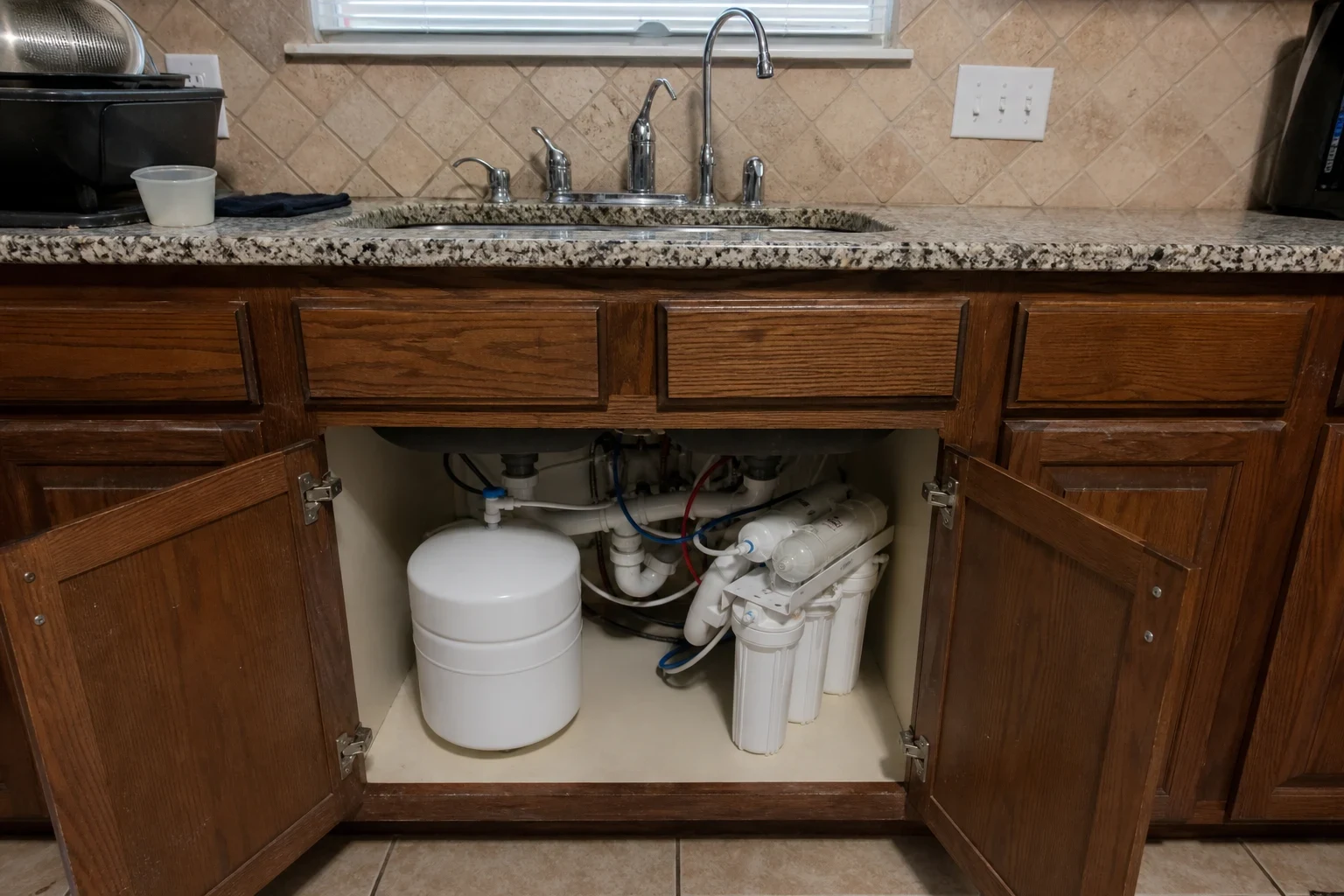
A typical system has a sediment prefilter, one or two carbon prefilters, the membrane, a small pressurized storage tank and a carbon polishing filter before the faucet. The carbon stages matter because chlorine and chloramine break down the membrane over time, so they protect it as well as improving taste.
RO is the right call when you want the cleanest water for drinking and cooking, not for showers or laundry. If your concern is chlorine smell throughout the house, whole-house carbon filtration is the better fit, and we will tell you that plainly.
What Your Installation Includes
Feed valve on the cold line
We add an adapter and shutoff on your cold supply so the RO unit has its own valve. You can isolate it for filter changes without shutting off the kitchen faucet.
Drain saddle and air gap
Reject water exits through a saddle clamped to the sink drain above the trap. Where the faucet allows, we use an air-gap design so wastewater can never siphon back into the system.
Dedicated drinking faucet
We mount the faucet in an existing sprayer or soap hole when there is one, or drill a clean hole in the sink or countertop.
Tank set and pressure checked
We check the storage tank's air precharge before filling it. A low precharge is the most common reason an RO faucet slows to a trickle after a few months.
Optional refrigerator line
If you want filtered ice and water at the fridge, we can run tubing from the system to the refrigerator connection.
Signs Reverse Osmosis Makes Sense for You
Your plumbing predates 1986
Lead solder was common in copper joints before the federal ban that year. RO removes lead picked up between the street and your tap.
You buy bottled water every week
An RO faucet gives you comparable water from the kitchen without the cases, the plastic or the trips to the store.
Coffee and ice taste off
Chlorine and dissolved solids show up most in coffee, tea and ice. The carbon and membrane stages together take both out.
A test turned up something you want gone
If water testing shows more nitrates, fluoride or total dissolved solids than you are comfortable with, RO is one of the few home methods that reduces them reliably.
White spots on kettles and glassware
High dissolved minerals leave residue when water evaporates. RO water leaves far less behind.
How the Install Day Goes
- 1
Look under the sink first
We check cabinet space, the drain layout, the cold valve and your water pressure. If a garbage disposal or a deep sink limits room, we plan the tank and filter placement around it.
- 2
Mount and connect
We hang the filter manifold on the cabinet wall, set the tank, install the feed valve and drain saddle, then mount the faucet. Towels and a drop cloth go down before any tools come out.
- 3
Flush and leak check
New carbon filters release fine particles, so we flush the system and discard the first tank. We check every compression fitting for weeping under pressure.
- 4
Walk you through upkeep
We show you where each filter sits, which stage gets changed when, and how to shut the feed valve. Then we clean up and take the packaging with us.
What Moves the Cost
Every system uses the same basic principle, so price differences come from the hardware you choose and the conditions under your sink. We go over these on the phone and give you a clear quote before any work starts.
- Number of stages
- A standard four or five-stage unit costs less than one with a remineralization stage or a UV lamp. We only suggest extra stages when your water or your preference calls for them.
- Countertop material
- Drilling a faucet hole in granite or quartz takes a diamond bit and more time than using an existing sprayer hole.
- Water pressure
- RO membranes need steady pressure to work efficiently. If your pressure is low, a small booster pump may be needed to keep production and the reject ratio reasonable.
- Refrigerator connection
- Running a line to the fridge adds tubing, a tee and labor, and the distance and route through cabinets affect how much.
Reverse Osmosis Questions
Something not covered here? (972) 476-7792
How much water does RO send down the drain?
Every RO system rejects some water to carry away what the membrane removes. The ratio depends on the membrane and your water pressure. Higher pressure means less waste, which is why we check it before recommending a unit.
Does RO water taste flat?
Taking the minerals out can make the water taste lighter than what comes from your regular tap. If that bothers you, we can fit a remineralizing stage after the membrane. It puts a little calcium and magnesium back in for a rounder flavor.
What upkeep does an RO system need?
Plan on fresh cartridges in the first stages, the sediment and carbon ones, roughly every twelve months, and earlier if your water tends to run cloudy or gritty. Kept on that schedule, the membrane itself often goes several years before it needs swapping. A slower faucet or a change in taste is the usual cue that something is due. If you would rather not keep track, our filter replacement and maintenance service can take it on.
Will RO remove lead from my old pipes?
Yes. A properly working membrane reduces lead well, which is why RO is a common choice in homes with older copper and solder. We suggest water testing first if you want a before-and-after number.
Do I still need a whole-house filter?
Not always. RO covers drinking and cooking water only. If chlorine smell in the shower or sediment in fixtures bothers you, a whole-house carbon or sediment filter handles that, and the two systems work well together.
Let's Work Out What Fits Under Your Sink
Give us a call and describe your cabinet, the age of your plumbing and what you would like changed about your water. We will recommend a system and explain our reasoning, just as we would for a neighbor down the street in Rowlett or Garland.