ServicesFilter replacement
Filter Replacement and Maintenance in Rowlett
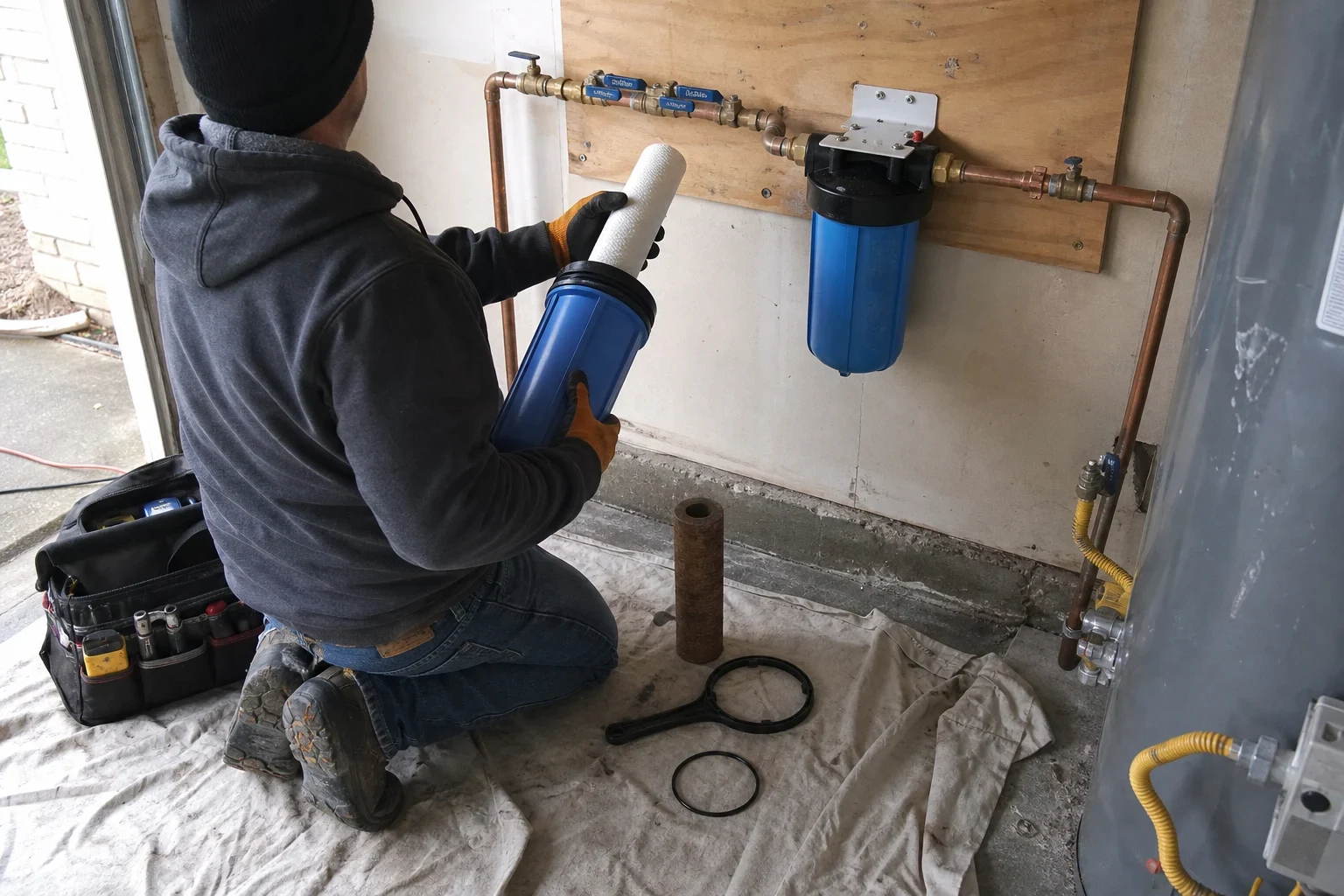
Spent media cannot hold anything back. On each visit we swap the cartridges, membranes or media your system is due for, check the seals and pressure, and show you which parts were exhausted and which still had months of use left.
Why filters need a schedule, not a guess
Filters wear out by design. A sediment cartridge traps silt and rust flakes until the pleats load up and pressure falls. Activated carbon holds chlorine on a limited number of adsorption sites, and when those sites are full, chlorine slips through untouched. An RO membrane fouls slowly with scale, so its rejection rate drops while the water in the glass looks exactly the same.
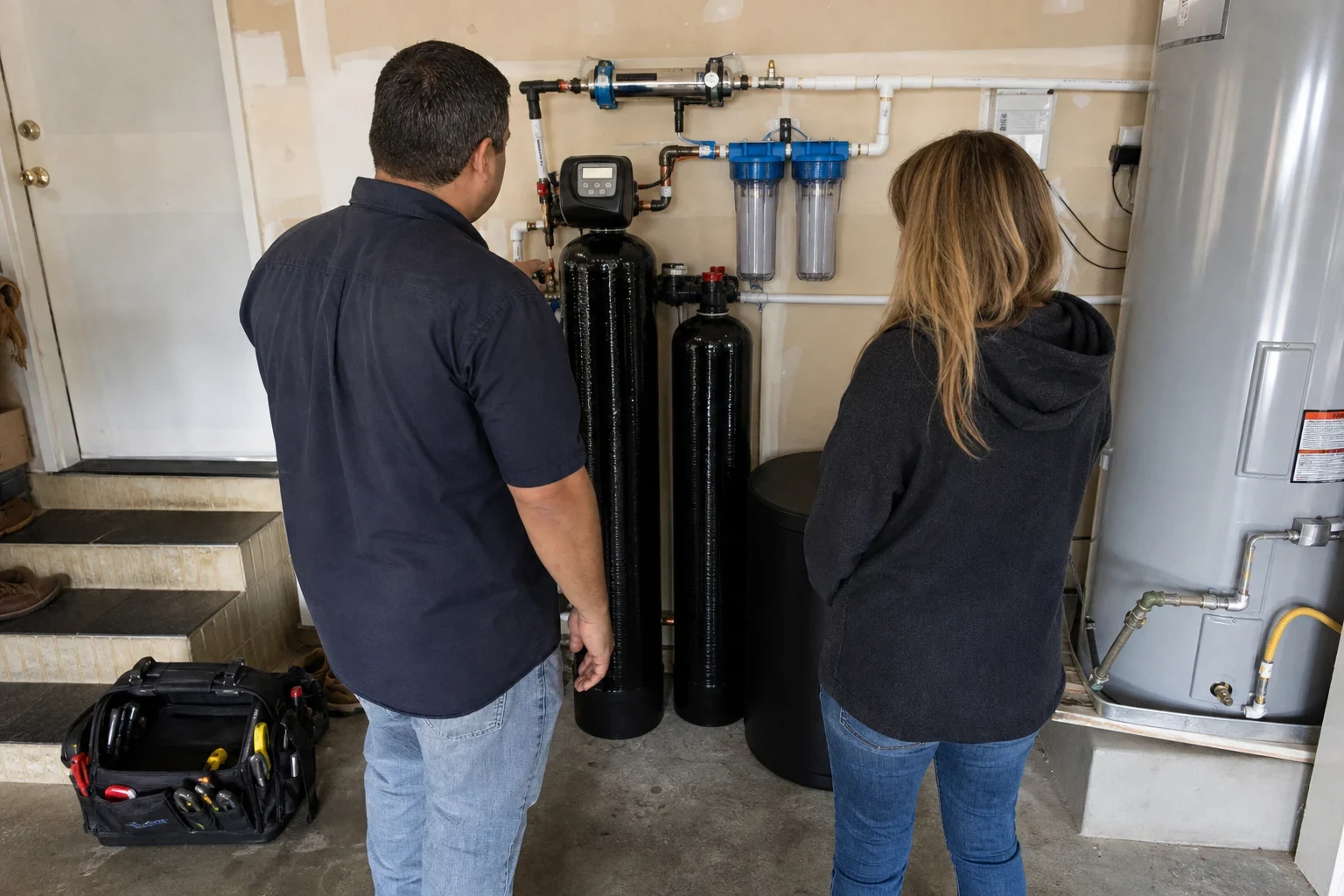
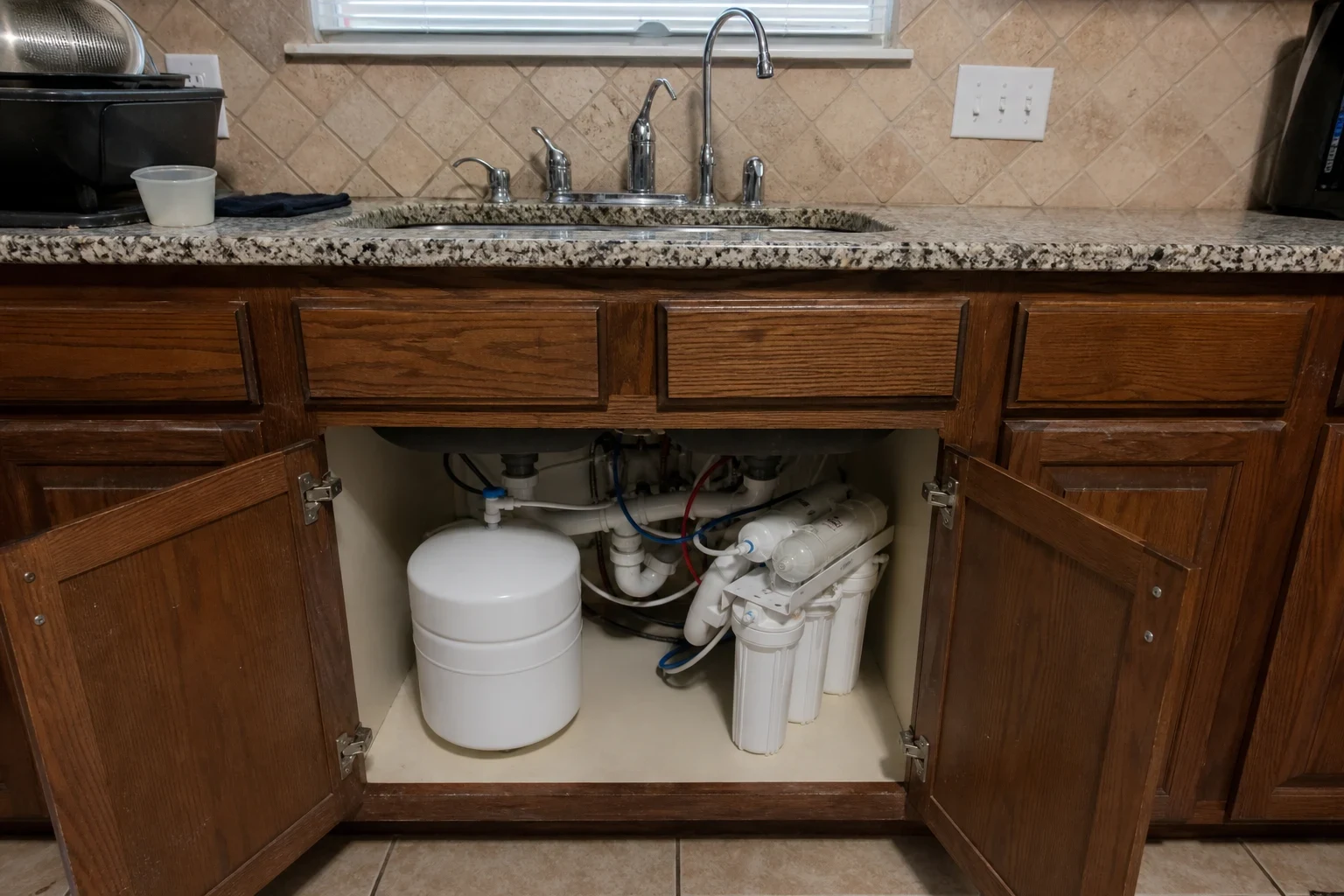
We look after reverse osmosis systems under the sink, carbon tanks in the garage, sediment and iron filters on the main line, and softeners. It does not matter whether we installed the equipment or it came with your home. We work the way we would want a neighbor working in our own kitchen: a towel under the cabinet, old cartridges bagged and taken away, and a plain account of what actually needed replacing.
What we check and change on each visit
Cartridges and membranes
Sediment, carbon block and polishing cartridges come out and fresh ones go in. The RO membrane is replaced only when the TDS reading says it is due. Every part matches your housing length and the original micron rating, so flow and filtration stay at design.
O-rings and sumps
Most slow leaks start at a housing O-ring that has flattened or cracked. We wipe out the groove, replace any ring that has taken a set and coat it with food-grade silicone grease before the sump goes back on.
RO performance readings
A TDS meter on the feed and product water tells us what percentage the membrane is rejecting. We also check the storage tank's air charge with the tank drained; it should be near 7 to 8 psi, and a low charge gives a weak trickle at the faucet.
Tank and control valve checks
On carbon, iron and softener tanks we confirm the valve settings, trigger a backwash or regeneration and watch the drain line flow. If the media bed is worn out, we explain what rebedding involves before touching it.
Sanitizing RO lines
During an RO filter change we can sanitize the housings and tubing so bacteria do not take hold in the new cartridges.
A dated label at the unit
The date and the parts installed go on a label right at the system, so nobody has to guess next time.
Signs your filters are overdue
- The chlorine taste has returned
- Carbon pulls chlorine out by adsorption. Once you can taste or smell it again at the tap, the carbon is saturated.
- Showers feel weaker than they used to
- A loaded sediment cartridge chokes the flow going to every faucet and shower after it. When pressure fades slowly over several months, the pre-filter is our first suspect.
- The RO faucet barely trickles
- Clogged pre-filters, a fouled membrane and a tank that has lost its air charge all cause slow fill. Each needs a different fix, so we measure before we replace anything.
- Nobody knows the last change date
- Many cartridges are rated for about six to twelve months, depending on use and water quality. If the date is a mystery, the filters are probably past due.
- Moisture under the sink
- Damp spots around a housing usually mean a tired O-ring or a hairline crack in the sump. Found early, that is a cheap part instead of a swollen cabinet floor.
What happens on the day
- 1
Start with a phone call
Share the brand and model of your equipment when you ring us, or simply describe what sits under the sink or in the garage. With that we can load the matching cartridges and finish most jobs in a single trip.
- 2
Shut off and depressurize
We close the supply valve, bleed off pressure and lay towels down before opening anything. We note how loaded the old cartridges are, which tells us whether your change interval is about right.
- 3
Replace, reseal, test
New parts go in with inspected, greased O-rings. Water comes back on slowly, air is purged and every housing is checked for weeps. On RO systems we flush the new carbon and take a fresh TDS reading.
- 4
Explain and clean up
We show you what came out, label the unit with the date and haul the old filters away. If something else is wearing, such as a valve, we explain it and leave the decision with you.
What moves the price
Parts make up most of the cost of a maintenance visit, and filters vary a lot from one system to the next. We give you the parts and labor price by phone or before we start, so nothing gets added at the end.
- Type of system
- One sediment cartridge is a small part. A multi-stage RO system with the membrane due, or a whole-house tank that needs new carbon media, takes far more material.
- Proprietary versus standard cartridges
- Standard 10-inch and 20-inch housings take filters that are easy to find. Some brands lock you into proprietary cartridges that cost more and take longer to source.
- Condition of seals and housings
- A cracked sump, a failing shutoff valve or a brittle supply line adds parts. We show you the problem before replacing anything.
- Access
- An RO system tucked behind a garbage disposal, or a whole-house filter wedged into a tight garage corner, takes longer to work on safely.
Filter maintenance questions
- How often should my filters be changed?
- That depends on the filter type and how much water your household runs through it. A typical range for sediment and carbon cartridges is six to twelve months, while an RO membrane usually outlasts them by a good margin. After our first visit we judge from the spent cartridges and suggest an interval that fits your home.
- Can you work on a system you did not install?
- Yes. Most systems use standard housings and fittings. If yours needs a proprietary cartridge, we tell you whether we can get it before we schedule the visit.
- Is a DIY filter change a good idea?
- On many systems it is, and we will gladly show you the steps while we are there. Three slips account for most of the leaks we are asked to fix: putting a flattened O-ring back in, overtightening the housing and skipping the flush on a new RO filter set.
- Does a new filter always fix bad-tasting water?
- No. If the taste comes back soon after a change, the water may contain something the system was never built to handle. Water testing is the honest next step before anyone sells you more equipment.
- Do you maintain softeners and iron filters too?
- Yes. We check the control valve, run a regeneration or backwash and look in the brine tank for salt bridging. If the resin or media is close to the end of its life, we tell you so you can plan ahead.
Put your next filter change on the calendar
Give us the make of your system and your best guess at when the filters were last swapped. We arrive with matching parts and leave the date on a label at the unit.