ServicesWater testing
Water Testing in Rowlett
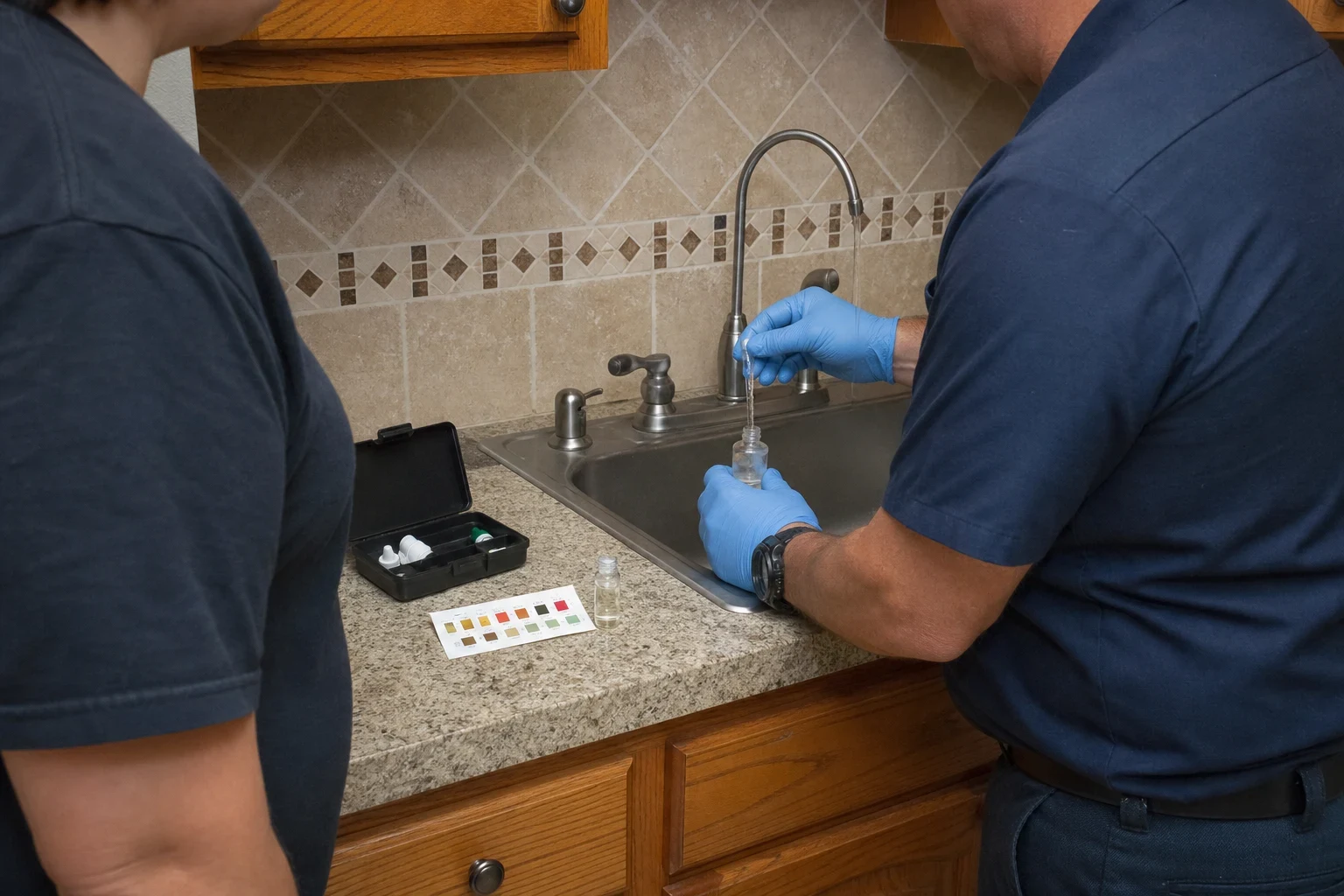
A filter or softener should answer a measured problem, not a guess. We read hardness, disinfectant, iron, pH and dissolved solids right at your kitchen tap, send samples to an independent lab when lead or bacteria are in question, and walk you through every result in plain terms.
Know the numbers before you treat anything
Most Rowlett homes run on treated city water that passes drinking water standards at the utility. Between the treatment plant and your faucet, though, conditions change. Hardness minerals build scale in water heaters, the disinfectant leaves a taste some people dislike, and older plumbing inside a house can add metals the utility never measured. A test tells us which of these, if any, applies to your home.
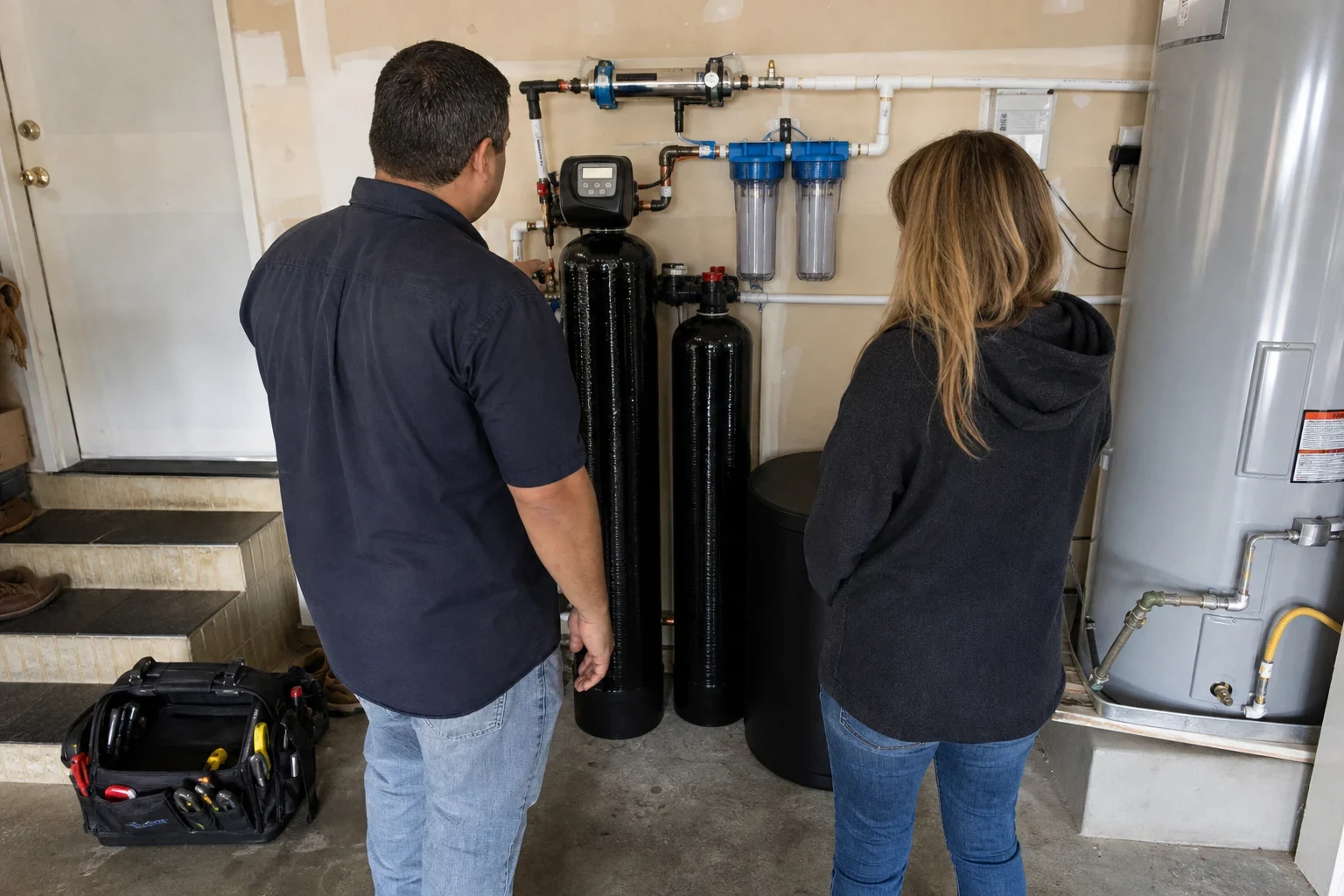
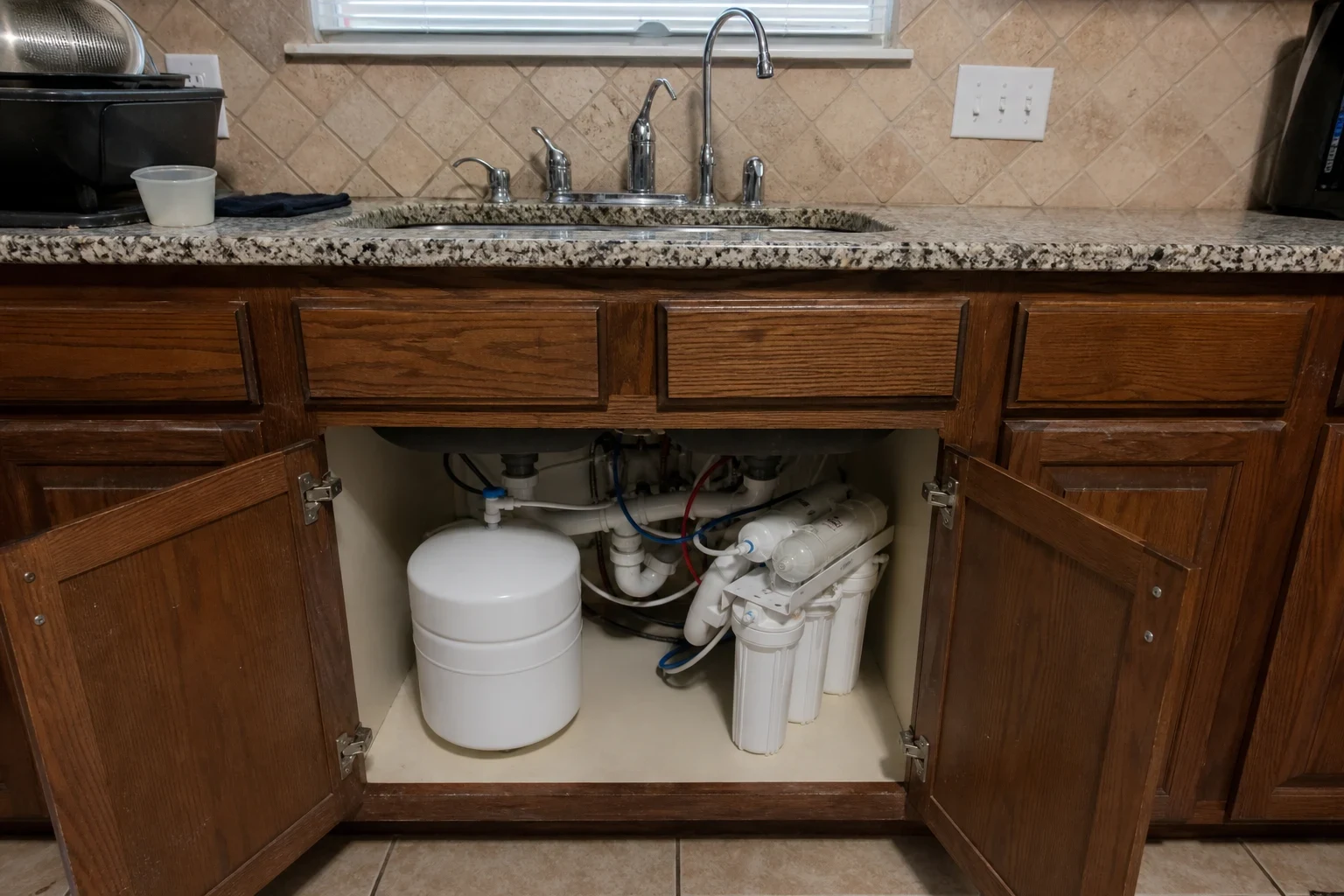
We start every equipment conversation with a test, because the right answer depends on it. Sometimes the result points to whole-house carbon filtration or an under-sink reverse osmosis system. Sometimes it shows your water is fine and the fix is simply a fresh cartridge. We tell you which, the way we would tell a neighbor.
What goes into our testing panel
Hardness, reported in grains
A titration kit counts the calcium and magnesium in your sample, and we give you the figure in grains per gallon. That one reading settles whether softening is even worth discussing.
Chlorine or chloramine level
We check total and free chlorine at the tap. Chloramine behaves differently from plain chlorine and needs more contact time in carbon, so the reading shapes which filter we would size.
Iron, pH and total dissolved solids
A TDS meter shows the overall mineral load, and pH tells us whether water is likely to be corrosive to copper lines. Iron is tested separately because even small amounts stain fixtures and laundry.
Lab sampling for lead and copper
For homes with older solder joints or brass fixtures, we collect a first-draw sample: water that has stood still in your lines for several hours, usually overnight. That bottle goes to an independent lab, since a home kit cannot measure lead reliably at low levels.
Bacteria testing for private wells
If your home draws from a well, we collect a sample in a sterile bottle for coliform and E. coli testing and get it to the lab within its holding time.
A written summary in plain terms
You get each result next to the standard or typical range, with a note on what it means for your plumbing and your drinking water.
Signs your home's water is worth testing
- White crust on faucets and showerheads
- Scale buildup points to hardness. A test tells you how hard, which matters before anyone sells you a softener.
- A pool smell from the tap
- A strong disinfectant odor is usually harmless but unpleasant. Knowing the level helps us pick carbon that will actually remove it.
- Orange or brown stains
- Rust-colored rings in toilets and sinks often come from iron or corroding pipes. Testing separates a source problem from a plumbing one.
- An older house or recent plumbing work
- Homes with original copper and lead-bearing solder, or a recent repair that disturbed lines, deserve a lead and copper check.
- A new baby or a new filter
- Many families test when a baby arrives or before buying equipment, so the choice is based on data instead of a sales pitch.
How a testing visit works
- 1
Talk it through by phone
Tell us what you are noticing and where your water comes from, city main or private well. We decide together which tests are worth running, so you are not paying for ones you do not need.
- 2
Sample at the right taps
We usually draw from the kitchen faucet and one bathroom, running water for a set time first. For lead, we explain how to leave the water standing overnight so the first-draw sample is valid.
- 3
On-site readings while we are there
Hardness, chlorine, pH, TDS and iron are measured in front of you, and we show you the readings as they come up. Lab samples are sealed, labeled and sent out.
- 4
Results and an honest recommendation
We walk you through every number. If treatment helps, we name the specific system and why; if nothing is needed, we say so.
What affects the cost of water testing
Two things set the price: the length of the test list and how much of it has to go to an outside lab. On-site screening runs less than lab analysis, and we point out which parts are which before you commit. You get your quote by phone before we schedule anything.
- Number of parameters
- A basic hardness and chlorine check is simpler than a panel that adds iron, pH, TDS and metals.
- Lab analysis
- Lead, copper and bacteria require an outside lab, which adds lab fees and shipping.
- City water or private well
- Well water usually needs bacteria and a wider mineral panel, since no utility is testing it for you.
- Sample points and retesting
- Testing several taps, or retesting after a filter is installed to confirm it works, adds time and materials.
Questions about testing your water
- The city already checks its water. Why test at my house?
- The utility samples at its plant and at points along its mains, and it publishes those results each year. Its sampling stops at your meter. Past that point, aging solder, brass fittings and a water heater can all change the water before it reaches your glass, so we sample at the taps you actually use.
- Will you try to sell me a softener after the test?
- Only if your hardness number supports it. Water across the area varies, and some homes do not need softening at all. We would rather recommend a cartridge change than equipment you will not benefit from.
- Can I just use a store test strip?
- Strips give a rough idea of hardness and chlorine, and they are a fine starting point. They cannot measure lead at meaningful levels or detect bacteria, and color matching is easy to misread. A titration kit, calibrated meters and a lab are more precise.
- When will lab results come back?
- You have the on-site readings in hand before we leave. Lab turnaround is set by the lab's queue and the type of analysis, so those numbers take longer. Once the report arrives, we call you and go through it line by line.
- Do you test homes outside Rowlett?
- Yes. We also work in nearby towns such as Garland, Sachse, Rockwall and Wylie. Our Service Areas page lists the rest.
Start with a test, not a sales pitch
Describe what you notice at the tap, the taste, the stains or the scale, and we will suggest the tests that answer it. Equipment only comes up once the numbers are in.