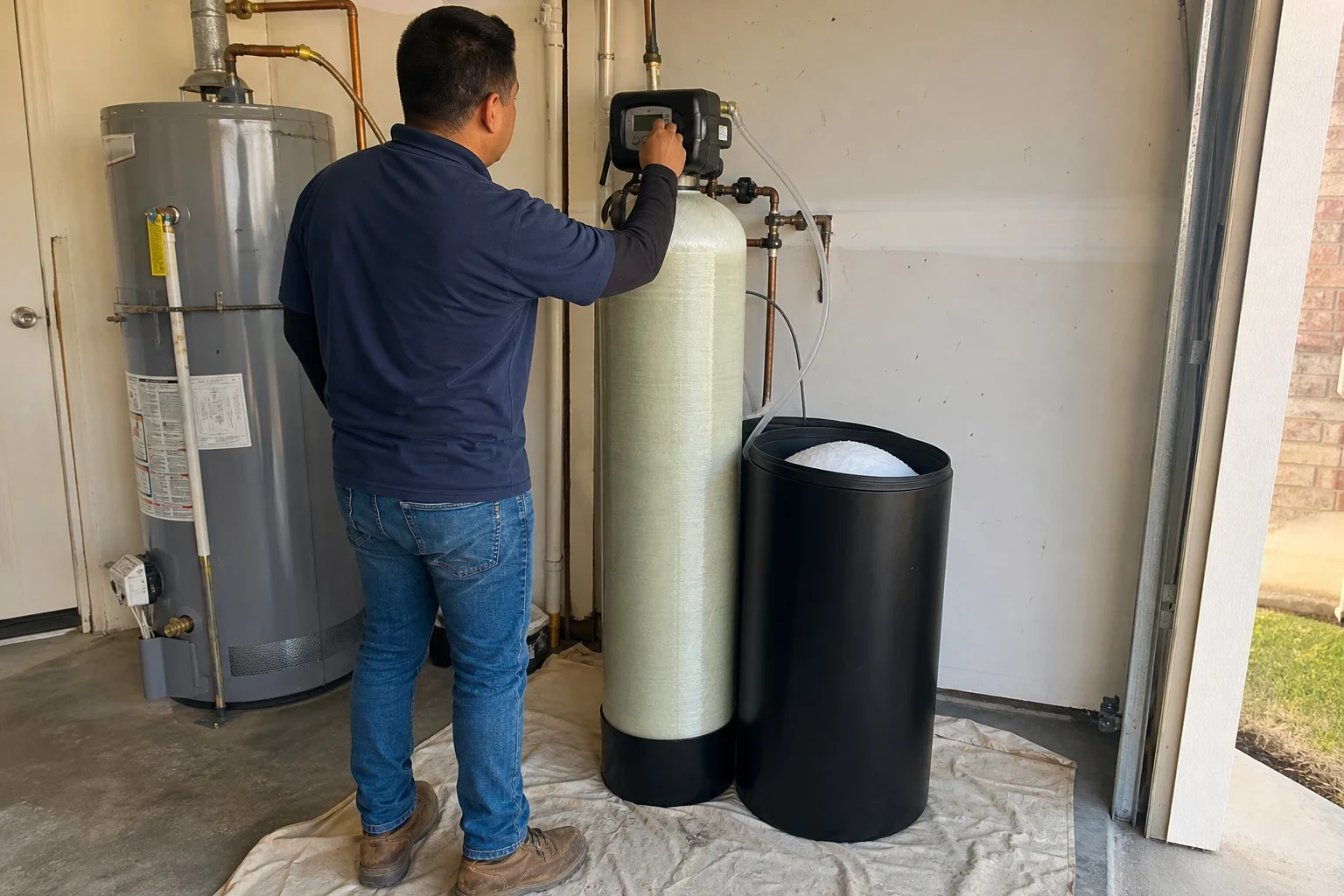
ServicesWater softeners
Water Softeners in Rowlett, Sized After a Hardness Test
Before we talk equipment, we measure the hardness at your kitchen tap and show you the reading in grains per gallon. When the number justifies a softener, we size the resin tank and valve to the water your home actually uses. When it doesn't, you hear that from us.
What a Softener Does, and When It Is the Right Call
Hard water carries dissolved calcium and magnesium. When it heats up or evaporates, those minerals drop out as scale on your water heater elements, inside faucet aerators and across shower glass. A softener runs your water through a tank of ion exchange resin. The resin beads hold sodium or potassium ions and trade them for calcium and magnesium, so the water leaving the tank no longer builds scale.
Hardness in North Texas varies with the source and the season, so we don't guess. We test the water in your home, convert the result to grains per gallon, and compare it with what your plumbing and appliances can tolerate. Moderately hard water often justifies a softener. Slightly hard water usually doesn't, and in that case we'll say so plainly and point you to options like whole-house carbon filtration if taste or odor is the real complaint.
We work the way we would for a neighbor down the street: the test result in writing, a clear reason for the recommendation and no extra equipment you don't need.
What Our Softener Work Includes
- Hardness test at your tap
- We measure total hardness and check for iron, since iron fouls resin and changes which system fits. You see the reading before we discuss any equipment.
- Sizing by grain capacity
- We multiply your hardness in grains per gallon by your household's daily water use to find how many grains the resin must remove between regenerations. That sets the tank size, so the unit doesn't regenerate too often or waste salt.
- Metered control valve
- We install demand-initiated valves that regenerate based on gallons used, not a fixed timer. A family that travels or has a light week uses less salt and water.
- Plumbing tie-in and bypass
- Many area homes have a softener loop in the garage. If yours doesn't, we cut into the main line and add a bypass valve so you can isolate the softener without shutting off water to the house.
- Drain line with an air gap
- The regeneration brine goes to a drain through a proper air gap, which keeps wastewater from siphoning back into your supply.
- Startup and walkthrough
- We fill the brine tank with salt and set the valve from your test readings. Before we leave, you'll know where to look to judge when salt is running low and which way to turn the bypass handle.
Signs Hard Water May Be Costing You
White crust on fixtures
Chalky buildup around faucet bases and showerheads is calcium carbonate left behind as water evaporates.
Spotty glasses and shower doors
Spots that come back right after cleaning usually point to mineral content, not your detergent.
Rumbling water heater
Scale settles at the bottom of the tank and traps water beneath it. The popping sound is that water flashing to steam, and the layer makes the heater work harder.
Soap that won't lather
Calcium and magnesium react with soap to form curd instead of suds, which leaves a film on skin and tubs.
Low flow at aerators
Scale clogs the fine screens in faucet aerators and showerheads first, so a drop in flow can be an early clue.
What Moves the Price of a Softener
No two softener jobs cost the same, because the right unit depends on your water and your plumbing. The test result and the install location drive most of the difference. We go over each line of the estimate by phone before any work starts.
Daily grain load
Every person in the house adds gallons used per day, and every grain of hardness multiplies those gallons. A bigger total calls for a larger resin bed and more salt each time the unit regenerates.
Existing loop or new tie-in
A pre-plumbed softener loop is a quicker connection. Cutting into the main line, adding a bypass and running a drain takes more time and material.
Valve type
A demand-initiated valve carries a higher price on install day than a simple clock timer. It earns some of that back over the years, because it regenerates only after a set number of gallons pass through, so the brine tank empties more slowly and less rinse water goes down the drain.
Pretreatment needs
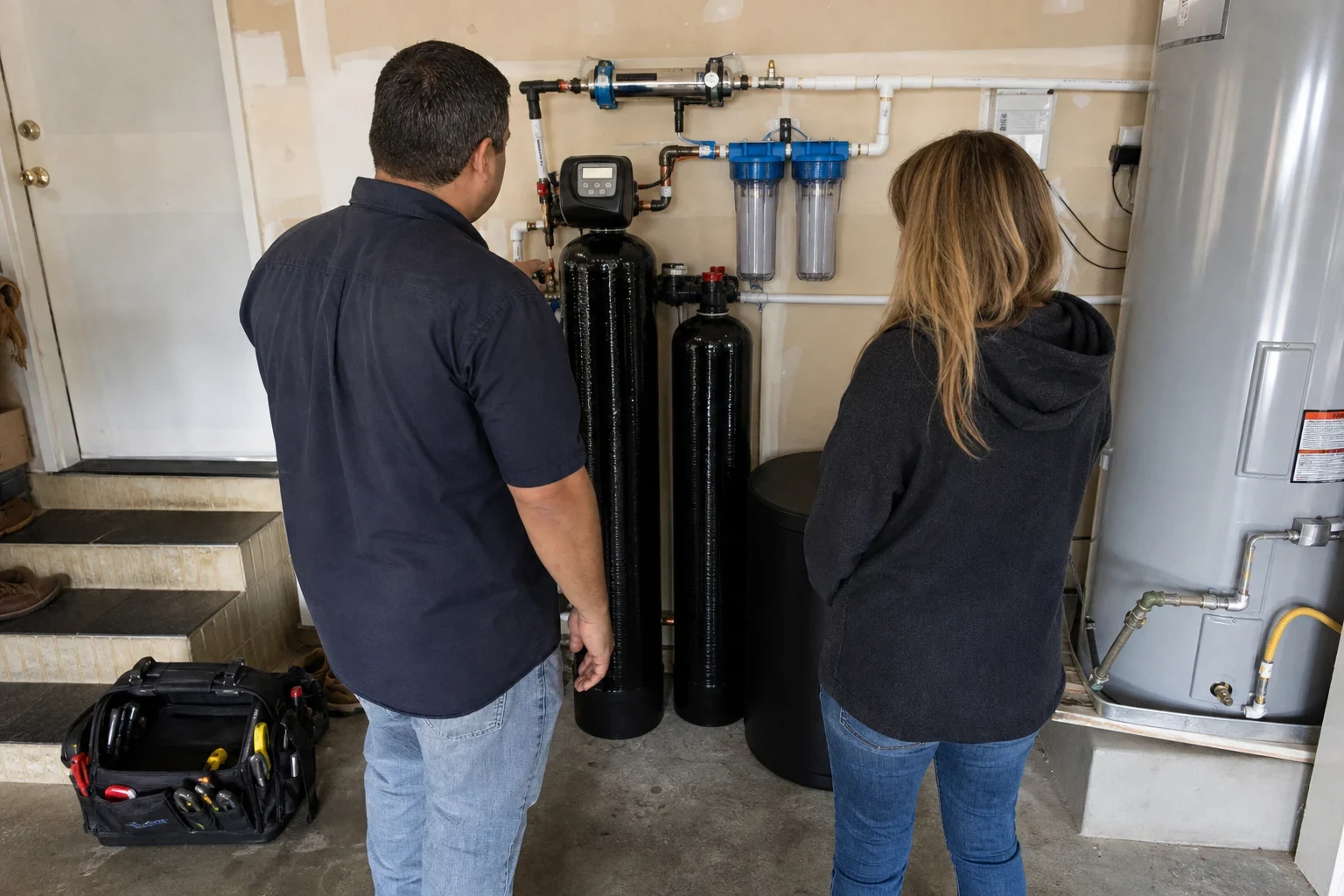
If the test finds iron or you want chlorine removed, a carbon or sediment stage ahead of the softener protects the resin and adds to the cost.
Permits
Some cities require a plumbing permit for a softener installation. When yours does, we pull it and include it in the estimate.
How a Softener Job Runs
- 1
Test and talk
We test hardness and iron at your tap, then explain the result in grains per gallon. If a softener isn't justified, the visit ends with that answer.
- 2
Size and quote by phone
We size the resin tank and valve to your hardness and household use, then walk you through a written line-item estimate.
- 3
Install day
We shut off the water, protect the floor where we work, tie in the softener and bypass, and run the drain line with its air gap. Most homes are without water for only part of the visit.
- 4
Program and clean up
We set the valve from your test numbers, run a manual regeneration to confirm the cycle, haul away packaging and leave the area clean.
Water Softener Questions
Do homes in Rowlett really need a softener?
Some do and some don't. Hardness varies across North Texas, and only a test of your own water answers it. We recommend a softener when the reading is high enough to build scale in your water heater and fixtures, and we tell you when it isn't.
Is softened water safe to drink?
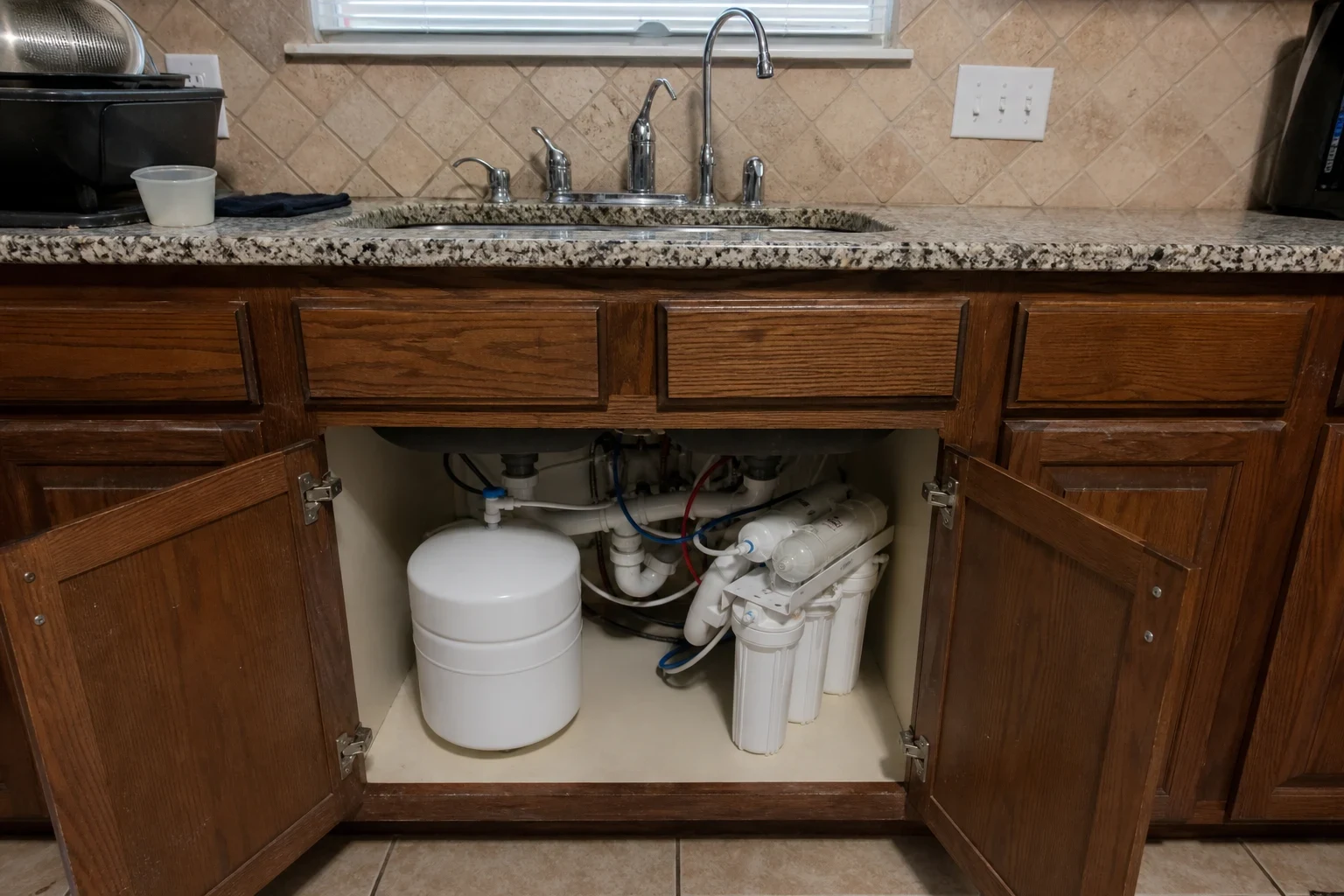
Yes for most people, though ion exchange adds a small amount of sodium in proportion to the hardness removed. If you're on a low-sodium diet, you can use potassium chloride instead of salt, or add under-sink reverse osmosis for drinking and cooking water.
Does a softener remove chlorine or improve taste?
No. A softener removes hardness minerals, not chlorine or odor. Chlorine can also break down resin over time, so if taste is a concern we may suggest whole-house carbon filtration ahead of the softener.
How often do I add salt?
It depends on your hardness, water use and tank size. With a metered valve, many households top off the brine tank every month or two. Keep the salt level above the water line in the tank.
What maintenance does a softener need?
Check the salt, break up any salt bridge that forms across the brine tank, and have the valve and resin looked at periodically. Our filter replacement and maintenance service covers those checks along with any prefilters in your system.
Find Out If Your Water Is Hard Enough to Soften
We'll test your water, show you the number and give you a straight answer. If a softener makes sense, we'll size it to your home and explain every line of the estimate.